Between Us
Presence, body, relation, space, movement, encounter.
Some works exist only when someone is there. These installations are made to be walked through, read aloud and shared: the viewer’s body, pace and attention complete them. They take the form of poetic atmospheres, of a forest recreated in black and white, and of projects adapted to real places where the work meets the people who pass through.
Visual poetry
(Art installation)
Poetic texts, written on textile or read aloud, are combined with different visual supports to create a meditative, aesthetic atmosphere. Words are seen, read and heard: a poem becomes a space to be in. Poems in French and Spanish appear alongside suspended dried flowers.
Poems on fabric and in space, to read and to listen to.


The Path
The Path begins with memories connected to nature: childhood memories, the forests of Berlin, the pine trees of Rome. Black-and-white textiles and printed works recreate the atmosphere of a forest. The visitor moves from darkness to light, following their own path, toward more clarity about direction and place in the world, and to question what gives life its meaning.
A black-and-white forest to walk through, from darkness to light.


Art in context, inside/outside Art
Installations that respond to a site’s history and uses.


Art installation “in context”: space, history and environment
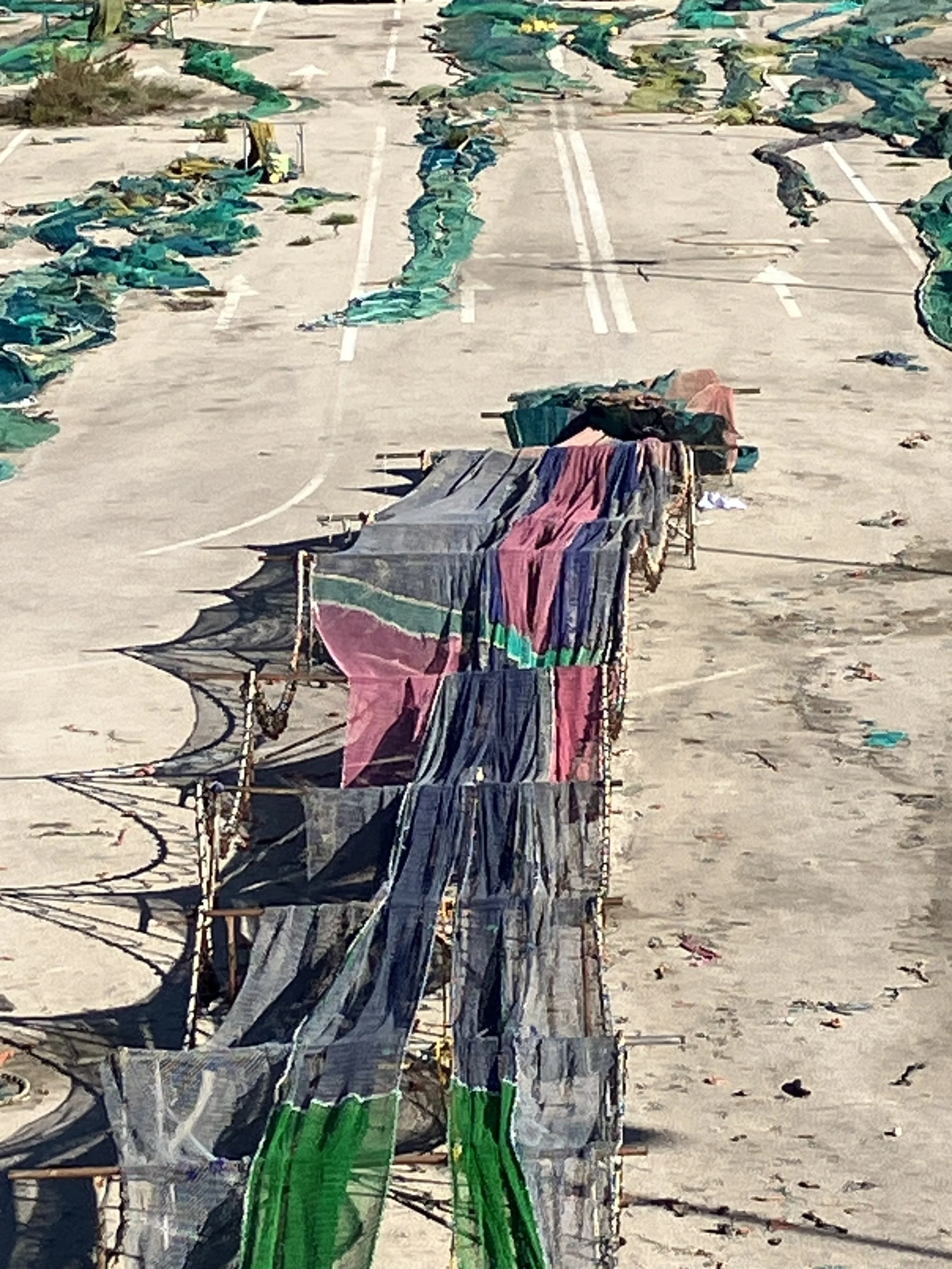
These installations are adapted to the places where they are shown, public or private: industrial buildings, sheds, parks, public squares, laundries, rope factories. Each proposal responds to the history and former uses of the site, to the theme of an event, or to the result of the artistic research, and brings that past back into the work. Fabrics hang over water or in trees, with lamps, objects and photographs.


Nostrum mare (ongoing)
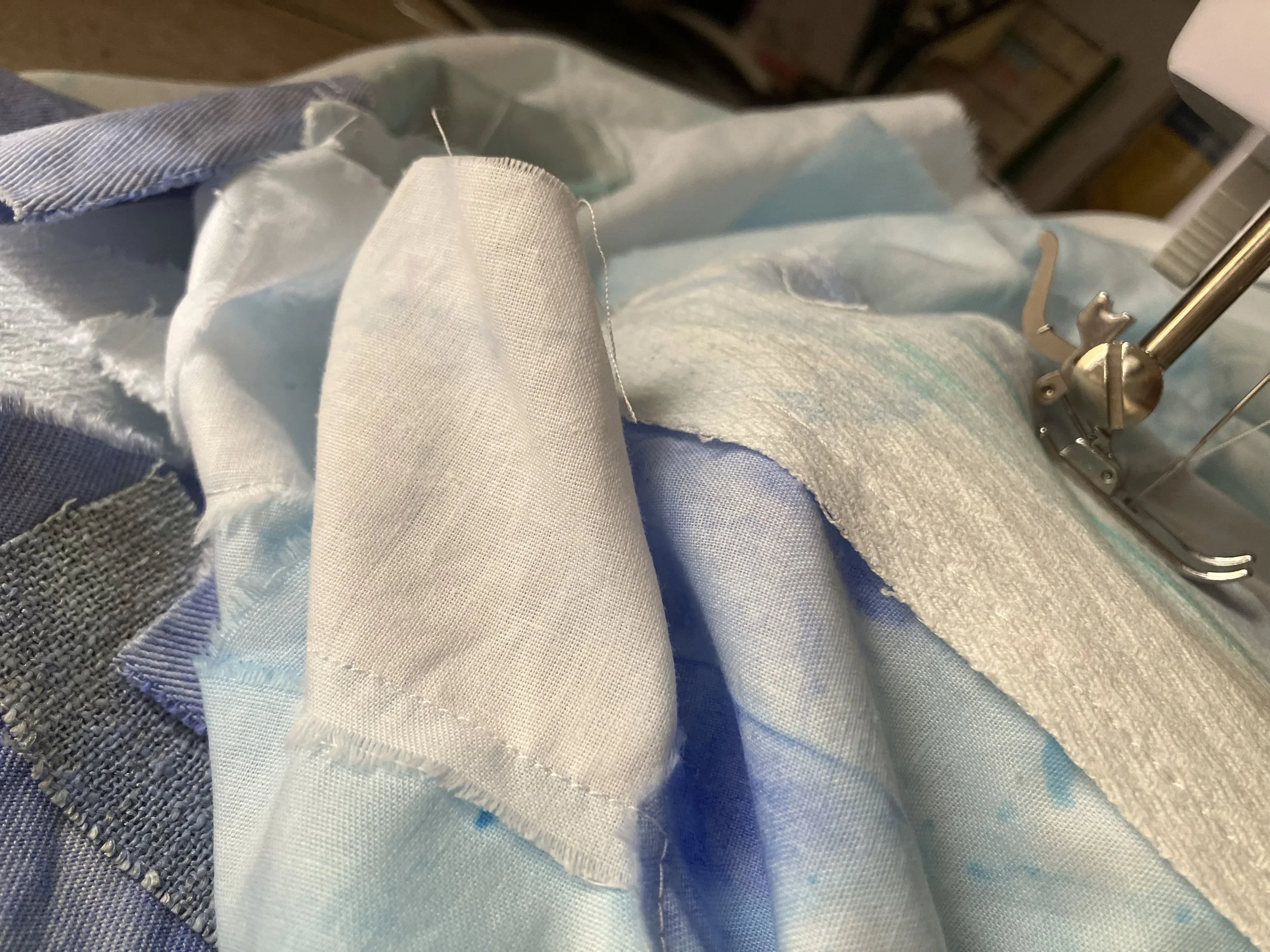
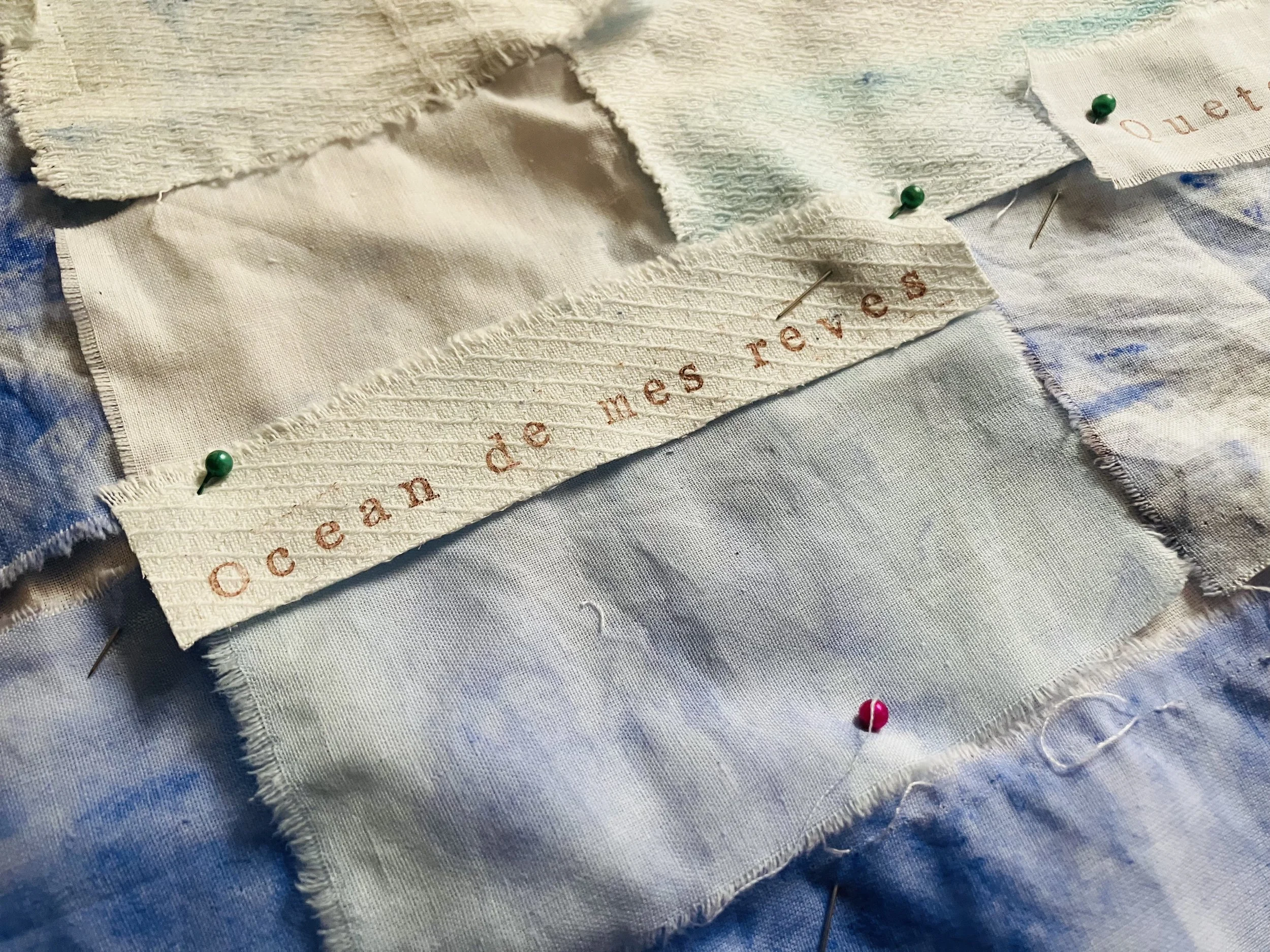
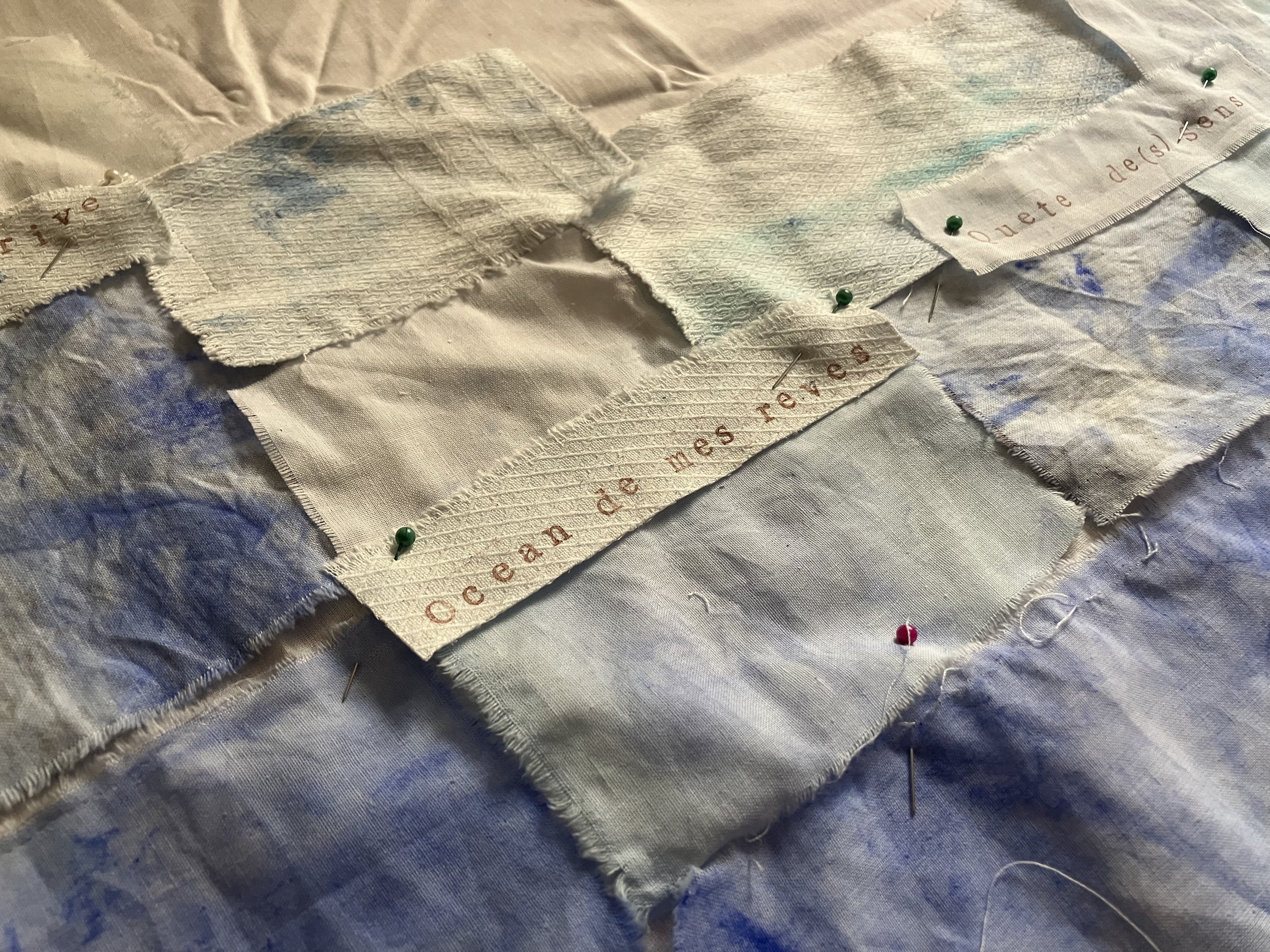
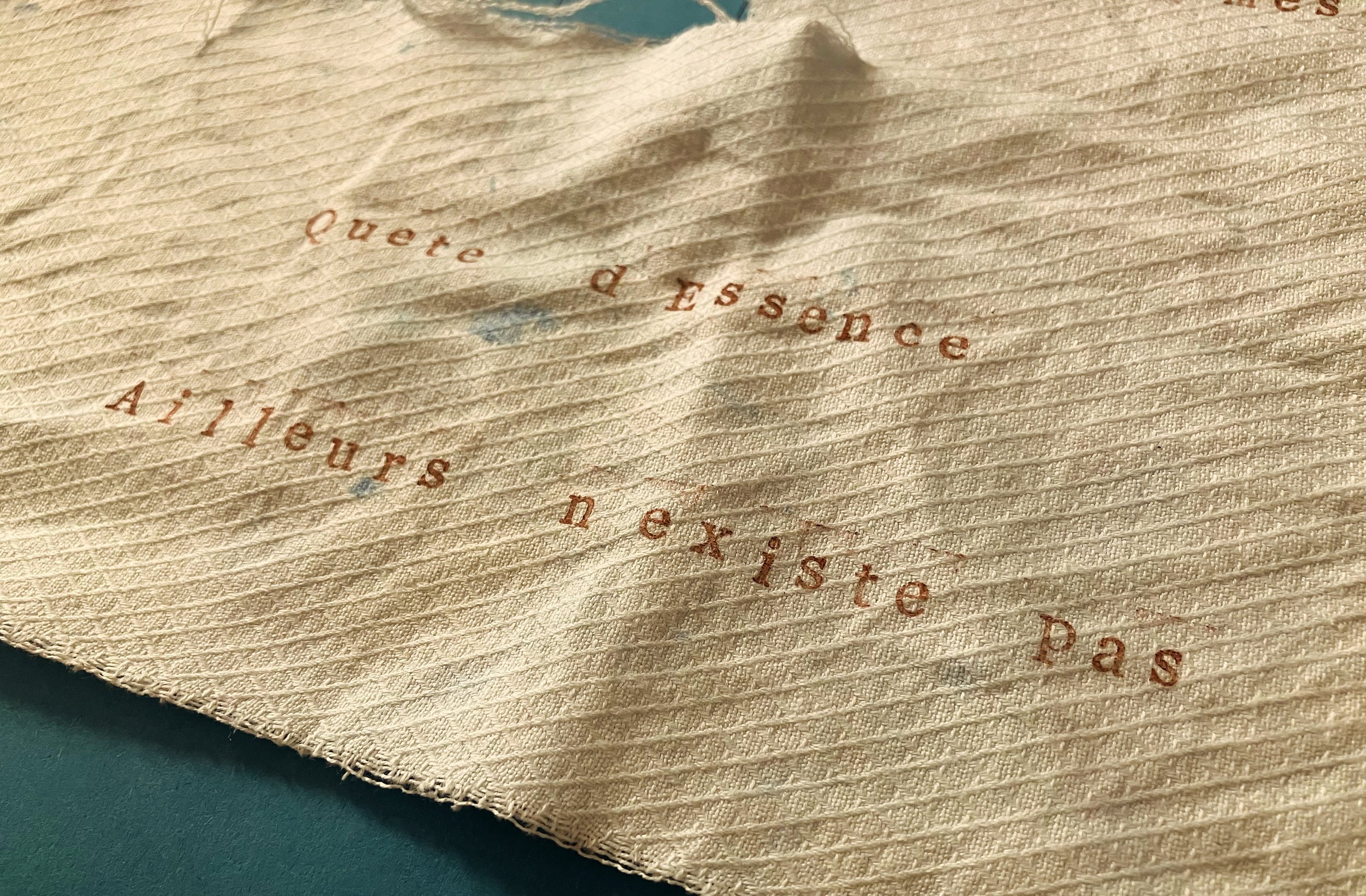
Nostrum mare, “our sea”, is what the Romans called the Mediterranean. This work in progress begins with a textile marked by words, and with photographs that question our link to the sea: a breakwater, a shore, the traces left on them.
Who is “our”? Is there an “elsewhere” when a sea joins the shores it also divides? The words stamped on the cloth hold these questions; the photographs set them in the landscape.